
Quick Summary
- Hand Rule: Left hand MUST go on top.
- The Notes: You only need 3 notes: B, A, and G.
- The Secret: Use “flat fingers” to cover holes completely.
- The Breath: Whisper “Doo,” don’t blow like a candle.
- The Goal: Play the full song cleanly in under 600 seconds.
I. Introduction (0:00 – 1:00)
The Goal: By the time you finish reading this, you will play the full melody of “Mary Had a Little Lamb.” We want a sound that is warm and clear, not sharp and squeaky.
The Challenge: Why do recorders squeak? It is usually not the instrument’s fault! It is almost always because of a tiny leak of air under a finger or blowing too hard. We are going to fix that before it happens.
Inventory Check:
Before we start, we must follow the Golden Rule of Recorder:
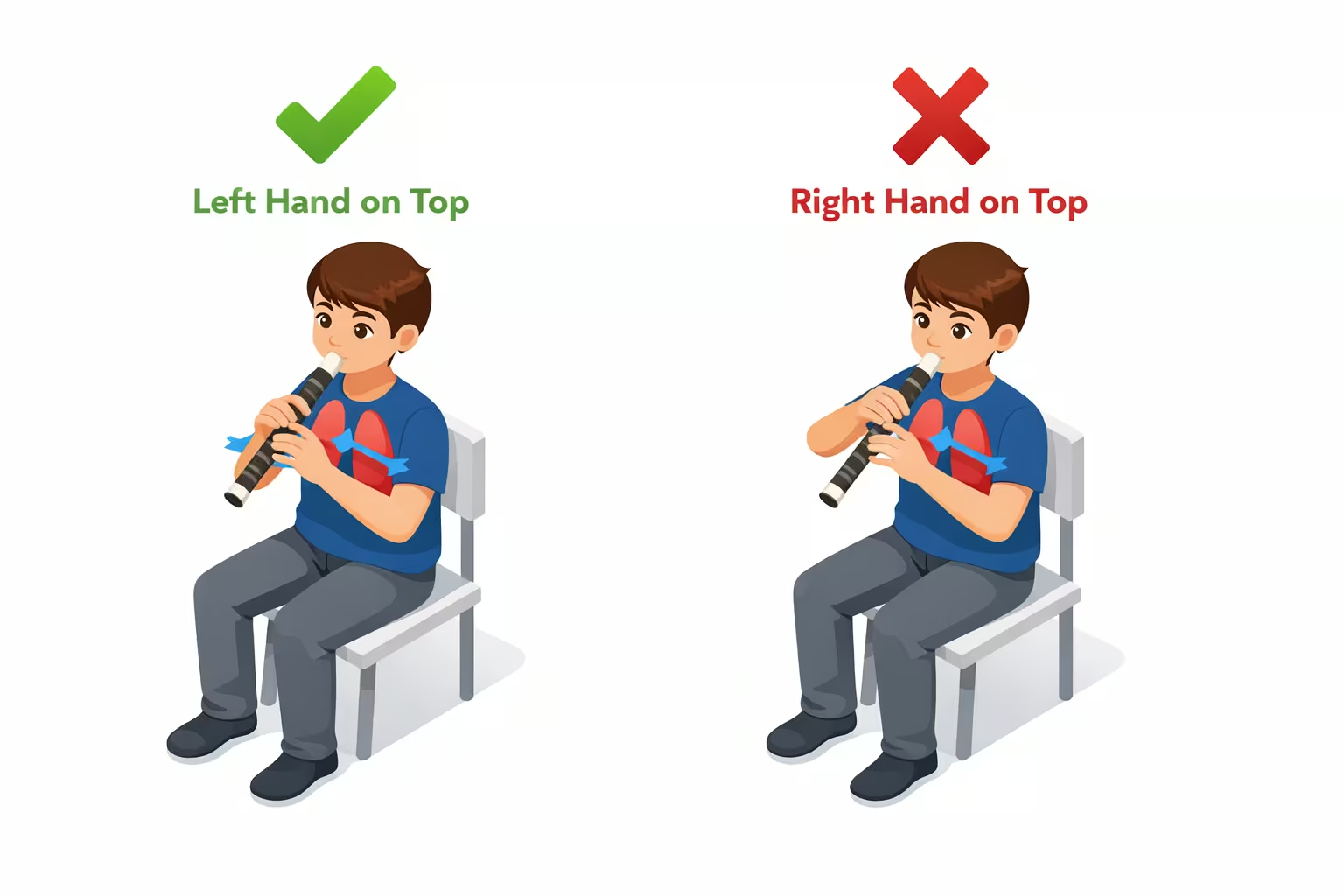
- Left Hand on Top: Even if you are right-handed, your left hand goes on the top part of the recorder. Your right hand holds the bottom to balance it.
- Sit Tall: Sit on the edge of your chair or stand up. Your lungs need space to work!
II. The “No-Squeak” Fundamentals (1:00 – 3:00)
Playing the recorder is more about science than luck. We need to control the air pressure and the seal.
The “Foggy Window” Breath
Most beginners blow too hard. This forces the sound wave to distort, creating a high-pitched squeak.
- Wrong Way: Blowing out a birthday candle (Fast, cold air).
- Right Way: Fogging up a window (Slow, warm air).
Try this: Hold your hand in front of your mouth. Whisper the syllable “Doo” or “Too.” Feel the warm air? That is exactly how you blow into the recorder.
Flat Finger Pads & The “Cheerios” Test
If air escapes from a hole you are trying to cover, the note will fail.
- The Science of the Seal: We need a 100% airtight seal.
- The Technique: Don’t use your tippy-toes (fingertips). Use the flat, fleshy pad of your finger (where your fingerprint is).
The “Cheerios” Test: Press your fingers down hard on the holes for 10 seconds. Take them off and look at your fingertips. Do you see little circles (like Cheerios)? If the circles are complete, you have a good seal. If the circle is broken, air is leaking!
III. The Three Magic Notes: B, A, and G (3:00 – 5:00)
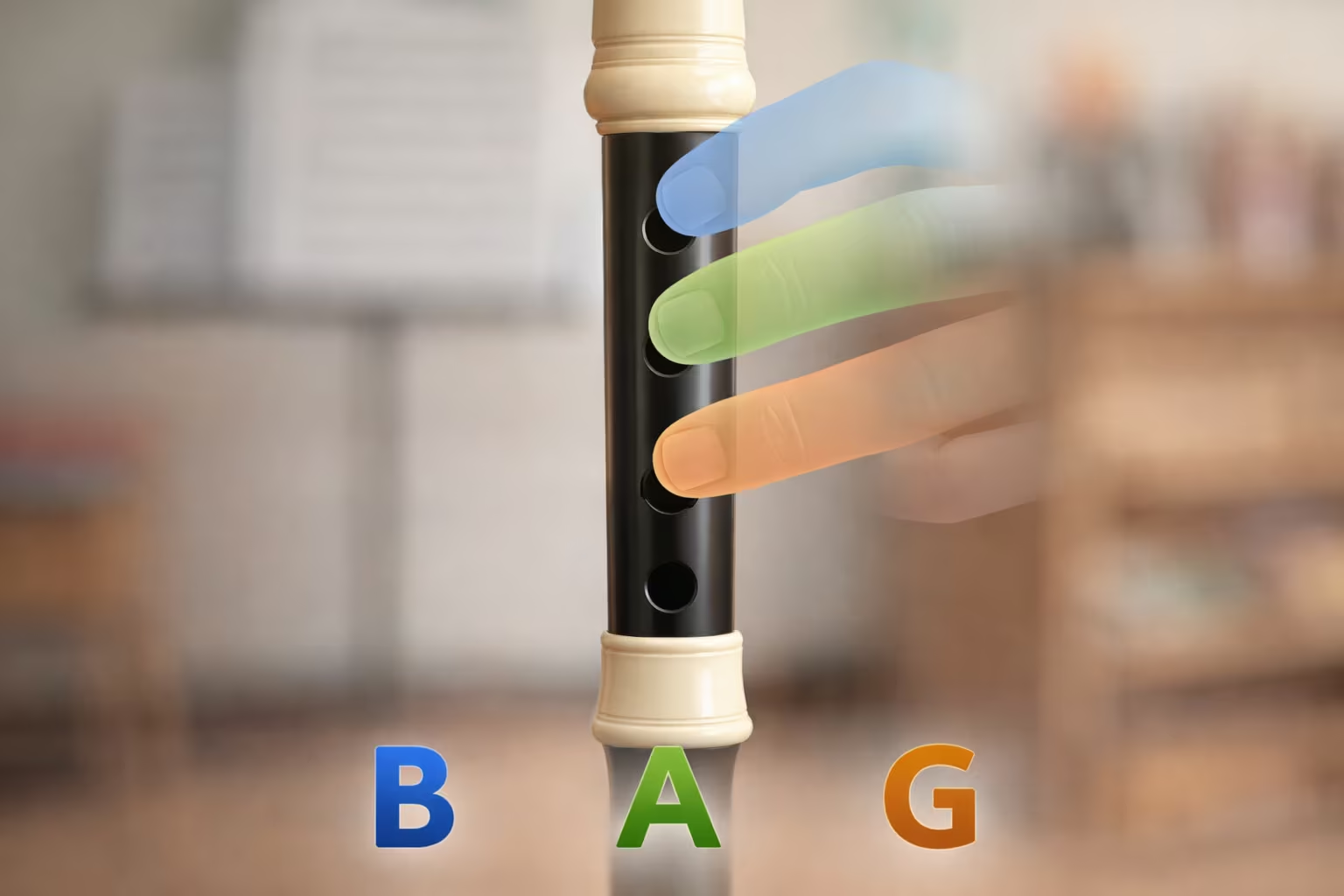
We only need three notes to play this song. We call them the “BAG” notes because they spell the word BAG.
Note B (The Top Note)
- Thumb: Cover the single hole on the back (Left Thumb).
- Finger 1: Cover the very top hole on the front (Left Pointer).
- Sound: High and bright.
Note A (The Middle Note)
- Thumb: Keep the back hole covered.
- Finger 1: Keep the top hole covered.
- Finger 2: Add your middle finger to the second hole.
- Sound: A bit lower and mellower.
Note G (The Low Note)
- Thumb: Keep the back hole covered.
- Fingers 1 & 2: Keep them down.
- Finger 3: Add your ring finger to the third hole.
- Sound: Deep and warm.
Exercise: The “Down-Up” Drill
Let’s test your fingers. Play these notes in order using a steady beat. We can represent the beat mathematically as T = 1 second per note.
B → A → G → A → B
Did it squeak? If yes, check your “Cheerios” circles!
IV. Learning the Melody: Phase by Phase (5:00 – 8:30)
We will break the song into 5 small chunks (phrases). This makes it easy to memorize.
Phrase 1: The Descent & Bounce
This is the most famous part of the song. You are walking your fingers down the recorder, then bouncing back up.
- The Notes: B — A — G — A
- The Rhythm: Long — Long — Long — Long
- Action: Start with 1 finger (B), add fingers until G, then lift one up to go back to A.
Phrase 2: The Triple B
Now we stay on the top note.
- The Notes: B — B — B
- The Rhythm: Short — Short — Long (Hold it!)
- Tip: Remember to whisper “Doo” for each note to separate them. Don’t just blow one long breath!
Phrase 3: The Triple A
Move down one finger to the A note.
- The Notes: A — A — A
- The Rhythm: Short — Short — Long (Hold it!)
Phrase 4: The High Jump
Go back up to B.
- The Notes: B — B — B
- The Rhythm: Short — Short — Long
- (Note: Advanced players sometimes play B – D – D here, but B – B – B works perfectly for beginners!)
Phrase 5: The Grand Finale
This puts it all together. It looks long, but you know all these moves!
- The Notes: B — A — G — A | B — B — B — B | A — A — B — A | G
- The Ending: The final G should be held for a full 4 counts ($4/4$ time).
V. Final Performance & Troubleshooting (8:30 – 10:00)
It is time for the full concert. Play it slowly.
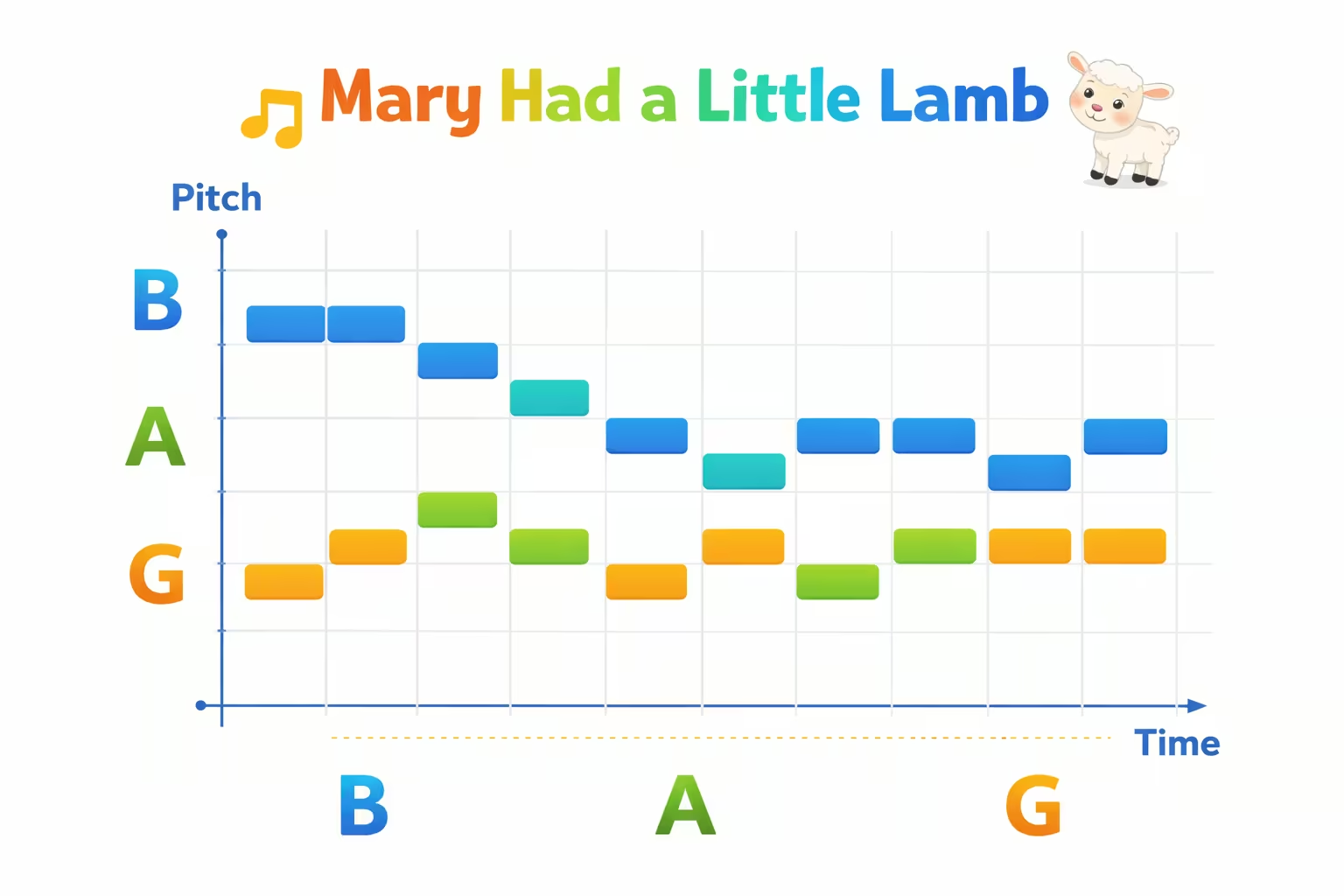
The Full Sequence:
Line 1
Ma – ry had a
B A G A
Line 2
Li – ttle lamb
B B B
Line 3
Li – ttle lamb
A A A
Line 4
Li – ttle lamb
B B B
Instead of playing B B B in Line 4, you can also play B G G.
Line 5
Ma – ry had a
B A G A
Line 6
Li – ttle lamb
B B B
Line 7
Its fleece was
B A A
Line 8
White as snow
B A G
Mary Had a Little Lamb Sheet Music
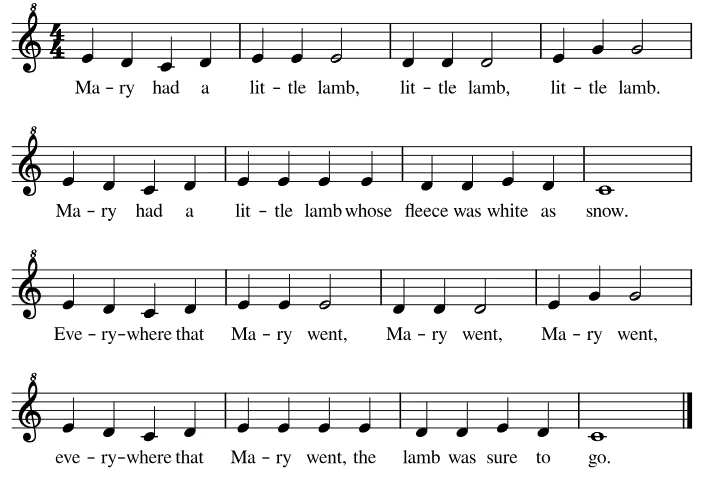
Mary Had a Little Lamb Letter Notes Video
Here is a video that shows you how to play Mary Had a Little Lamb using easy letter notes. Follow along step-by-step and you’ll be able to play the full melody in just a few minutes.
Self-Correction Checklist (The “Human Lab”)
If something sounds wrong, run this diagnostic test:
- The Squeak Test: “The squeak is a leak.” If a note screams at you, flatten your fingers.
- The Hand Check: Is your LEFT hand on top? If you switched to your right hand, the holes won’t line up with your fingers correctly.
- The Whisper Check: Are you blowing too hard? Relax your belly and blow gently.
VI. Wrap-Up & Next Steps
Congratulations! You have just learned your first song on the recorder. By using the B, A, and G notes, you have unlocked the door to hundreds of other songs.
Your Practice Goal:
Try to play the song 5 times in a row without a single squeak. If you squeak, the count resets to zero!
Interactive Knowledge Check
Let’s see if you’re ready to perform.
1. Which hand goes on top of the recorder?
- A) The hand you write with
- B) The Right Hand
- C) The Left Hand
- D) It doesn’t matter
2. If your note sounds like a high-pitched scream, you are likely:
- A) Blowing too soft
- B) Leaking air from a finger hole or blowing too hard
- C) Playing the wrong note
- D) Holding the recorder upside down
3. To separate notes (like B – B – B), you should:
- A) Stop blowing completely between notes
- B) Use your tongue to say “Doo”
- C) Tap your foot
- D) Squeeze the recorder harder
(Answers: 1:C, 2:B, 3:B)
FAQs
Q: Can I play Mary Had a Little Lamb on a Alto recorder with these fingerings?
A: No. The fingerings B-A-G on an Alto recorder produce different pitches (E-D-C). The pattern is the same, but the song will sound much lower.
Q: Why does my low G note sound bubbly or refuse to play?
A: The G note (3 fingers + thumb) requires the softest breath pressure. If you blow as hard as you do for a B, the G will “overblow” and squeak. Soften your breath.
Q: Is the recorder a real instrument or just a toy?
A: The recorder is a serious classical instrument with a repertoire dating back to the Baroque era (Bach and Vivaldi). Learning it properly builds a foundation for flute, clarinet, and saxophone.
What’s Next?
Once you master this, you are ready for “Hot Cross Buns” and “Au Clair de la Lune”, which uses the exact same notes but in a different order. Keep those fingers flat and that breath warm!
Editorial Note
This guide was constructed based on acoustic physics and pedagogical standards for woodwind instruction. The “Foggy Mirror” technique is a recognized method in orchestral training for tone development.