
Quick Summary
- Difficulty: Beginner
- Key: C Major (No sharps or flats)
- Main Notes Used: C, D, E, F, G, A (Do, Re, Mi, Fa, Sol, La)
- Technique: Uses the “Octave Jump” from Low C to G.
- Best For: Learning rhythm and simple finger transitions.
About Baa Baa Black Sheep
Baa Baa Black Sheep is one of the oldest and most famous nursery rhymes in English history. It was first printed in 1744 in a book called Tommy Thumb’s Pretty Song Book. Over the years, it has become a favorite children’s song around the world.
The rhyme originally reflected everyday life in England, when wool was a very important material. The black sheep in the song was said to have three bags of wool—one for the master, one for the dame, and one for the little boy who lives down the lane. While it’s simple and fun to sing today, it also gives a small glimpse of history and how families and workers shared resources in the past.
Today, Baa Baa Black Sheep tonic solfa is widely used by music teachers to help children and beginners learn piano and singing. Using tonic solfa makes it easier for young learners to follow the melody, play on the keyboard, and sing along, keeping this historic rhyme alive in classrooms and homes.
What is Tonic Solfa?
Before we jump into the notes, let’s understand tonic solfa. Instead of using C, D, E, F, G, A, B, tonic solfa uses syllables:
- d = Do (C)
- r = Re (D)
- m = Mi (E)
- f = Fa (F)
- s = Sol (G)
- l = La (A)
- t = Ti (B)
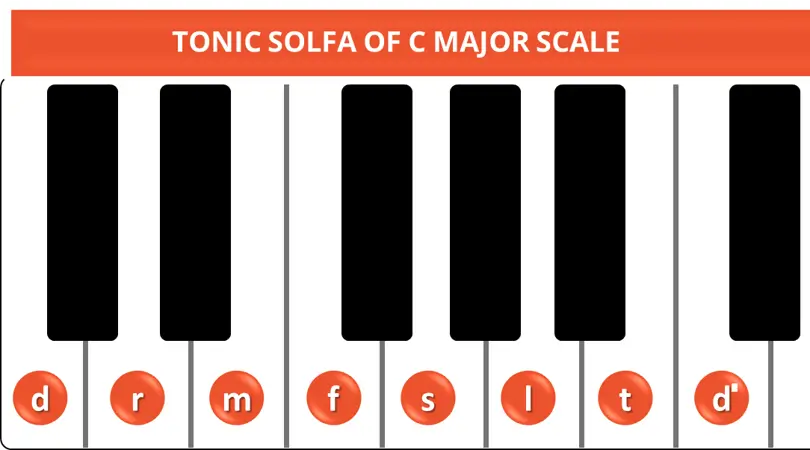
This system makes it easier to read, sing, and play songs, especially for children or beginners. Using Baa Baa Black Sheep tonic solfa allows you to focus on melody and rhythm without worrying about traditional sheet music.
Full Baa Baa Black Sheep Tonic Solfa Notation Version 1
Here’s the complete tonic solfa version of “Baa Baa Black Sheep.” Follow it slowly at first, then gradually play and sing together.
Line 1
Baa, baa, black sheep
d d s s
Line 2
Have you a – ny wool?
l l l l s
Line 3
Yes sir, yes sir
f f m m
Line 4
Three bags full
r r d
Line 5
One for the mas – ter
s s s f f
Line 6
One for my Dame
m m m r
Line 7
One for the li – ttle boy
s s s f f f
Line 8
Who lives down the lane
f m m m r
Line 9
Baa, baa, black sheep
d d s s
Line 10
Have you a – ny wool?
l l l l s
Line 11
Yes sir, yes sir
f f m m
Line 12
Three bags full
r r d
Full Baa Baa Black Sheep Tonic Solfa Version 2
Here’s the complete Baa Baa Black Sheep tonic solfa version 2. Follow it slowly at first, then gradually play and sing it.
Line 1
Baa, baa, black sheep
d d s s
Line 2
Have you a – ny wool?
l t dI l s
dI stands for higher octave “d“.
Line 3
Yes sir, yes sir
f f m m
Line 4
Three bags full
r r d
Line 5
One for the mas – ter
s s s f f
Line 6
One for my Dame
m m m r
Line 7
One for the li – ttle boy
s s s f f f
Line 8
Who lives down the lane
f m m m r
Line 9
Baa, baa, black sheep
d d s s
Line 10
Have you a – ny wool?
l t dI l s
dI stands for higher octave “d“.
Line 11
Yes sir, yes sir
f f m m
Line 12
Three bags full
r r d
Step-by-Step Guide to Play Baa Baa Black Sheep
Step 1: Learn the Tonic Solfa Syllables
Before you start, practice the basic tonic solfa scale:
d r m f s l t d’
Step 2: Practice Small Sections
Start with the first line of Baa Baa Black Sheep tonic solfa:
d d s s
l l l l s
Play it slowly, one note at a time. Focus on accuracy, not speed.
Step 3: Add Singing
Once you can play the notes, sing the tonic solfa syllables as you play.
Step 4: Combine Lines
After practicing each line separately, combine them to play the entire verse. Take your time, and don’t worry about mistakes—slow practice builds confidence.
Step 5: Play With Dynamics
Once comfortable, try adding loud and soft notes, or even clapping along. This makes playing Baa Baa Black Sheep fun and musical.
Practice Tips for Beginner
Here are some extra tips for learning Baa Baa Black Sheep tonic solfa:
- Practice daily – Even 10–15 minutes a day helps a lot.
- Record yourself – Listening back helps you spot mistakes.
- Take breaks – Short breaks help your brain remember the notes better.
- Sing while playing – Singing helps your hands and ears work together.
Related Songs Using Tonic Solfa
After mastering Baa Baa Black Sheep tonic solfa, you can try other easy children’s songs:
- Twinkle Twinkle Little Star tonic solfa
- Mary Had a Little Lamb tonic solfa
- Rain Rain Go Away tonic solfa
- London Bridge is Falling Down tonic solfa
These songs follow simple patterns, making them easy for beginners. Learning one song helps with the next!
FAQs About Baa Baa Black Sheep Tonic Solfa
Q1: Can kids play Baa Baa Black Sheep using tonic solfa?
Yes! Tonic solfa makes it easy for children to play and sing even if they are complete beginners.
Q2: Do I need to know piano keys to use tonic solfa?
Not really. Tonic solfa helps you match syllables to keys, so beginners can start immediately.
Q3: How can I memorize the melody faster?
Practice small sections, sing the notes out loud, and repeat daily. Labeling your keys helps too.
Q4: Can I use tonic solfa for other nursery rhymes?
Absolutely! Once you learn one song, you can easily learn many others using the same system.
Q5: Is tonic solfa only for kids?
No! Beginners of all ages can use tonic solfa to learn music in a fun and simple way.
Final Thought
Learning Baa Baa Black Sheep tonic solfa is a fun, easy, and educational way to start your piano journey. With tonic solfa, you can:
- Play easy piano songs for kids
- Sing and play at the same time
- Build confidence in music
- Enjoy learning without complicated sheet music
All you need is your piano, your voice, and a little practice. Soon, you’ll be playing Baa Baa Black Sheep confidently and ready for more nursery rhymes.