If you’re learning to play piano, cello, bass guitar, or any low-pitched instrument, understanding the bass clef notes is essential. While the treble clef covers higher notes, the bass clef helps you read lower notes—the deep, rich tones that give music its foundation.
In this beginner’s guide, we’ll break down everything you need to know to read bass clef notes with confidence, including how they relate to the piano, simple memory tricks, and step-by-step practice tips.
What Is the Bass Clef?
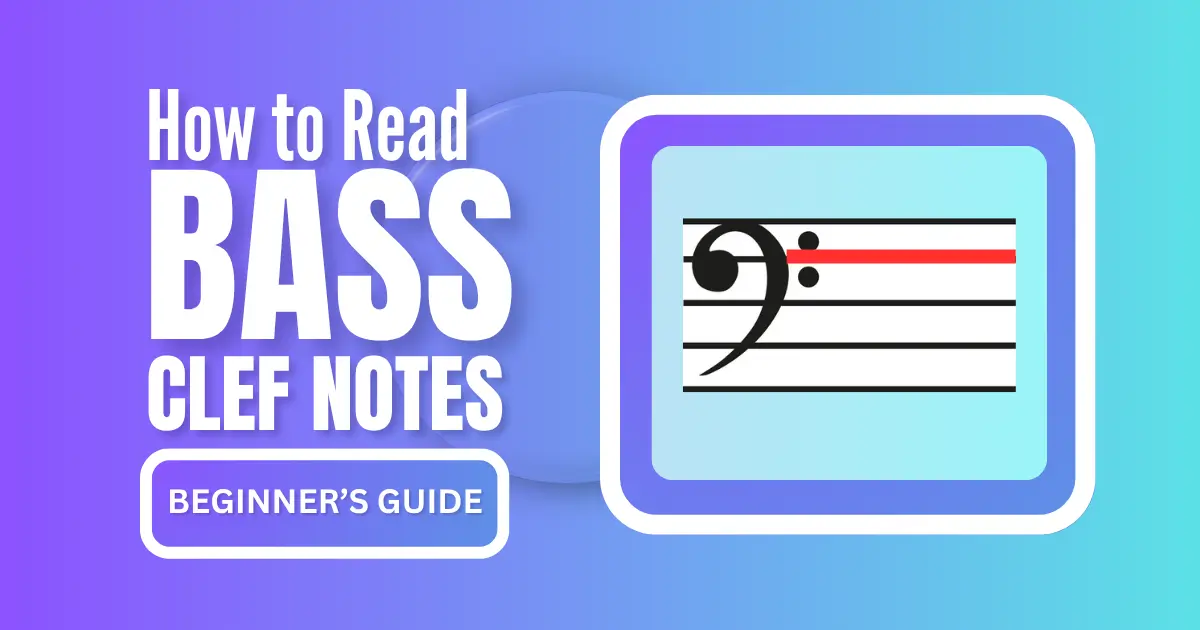
The bass clef, also called the F clef, is a musical symbol that tells you where lower-pitched notes are placed on the staff.
It’s called the F clef because it marks the F below Middle C (F3) on the fourth line of the staff. You’ll recognize it by its backward C-shape and two dots placed around that line.
image here
Common Instruments That Use the Bass Clef
The bass clef is used by many low-pitched instruments, including:
- 🎹 Left hand of the piano
- 🎸 Bass guitar
- 🎻 Cello
- 🎺 Trombone
- 🎷 Bassoon
- 🎼 Baritone and Bass vocal ranges
If you play any of these, learning the bass clef scale is a must.
Understanding the Bass Clef Staff
Just like the treble clef, the bass clef staff has:
- 5 lines
- 4 spaces
But the note names are different because they start lower in pitch.
Line Notes in the Bass Clef
The five lines of the bass clef (from bottom to top) represent:
G – B – D – F – A
Mnemonic: Great Big Dogs Fight Animals
Space Notes in the Bass Clef
The four spaces of the bass clef (from bottom to top) represent:
A – C – E – G
Mnemonic: All Cows Eat Grass
These are your core bass clef notes, and you’ll see them in left-hand piano parts, bass guitar tabs, and more.
Ledger Lines Bass Clef Notes
Ledger lines extend the range of the staff beyond its five lines. In the bass clef, notes can appear above or below the staff using these lines:
- Below the staff:
- E – One ledger line below
- C – Two ledger lines below
- A – Three ledger lines below
- F – Four ledger lines below
- Above the staff:
- C – One ledger line above (Middle C)
- E – Two ledger lines above
- G – Three ledger lines above
- B – Four ledger lines above
Recognizing these ledger lines is crucial for reading notes that fall outside the standard staff range.
How Do I Apply This to the Piano?
On the piano, the bass clef notes correspond to the lower half of the keyboard. For example, the note F below middle C is located just to the left of the group of three black keys. By practicing scales and simple pieces in the bass clef, you can become more comfortable locating and playing these notes.
How to Read Bass Clef Notes on Piano
If you’re a pianist, the bass clef notes are typically played with your left hand.
Here’s a quick guide to match notes on the bass clef staff with piano keys:
- G2 – bottom line
- A2 – first space
- B2 – second line
- C3 – second space
- D3 – third line
- E3 – third space
- F3 – fourth line (F clef)
- G3 – fourth space
- A3 – top line
Middle C (C4) is located one ledger line above the bass clef staff.
Tips for Reading Bass Clef Notes
- Practice Daily: Regular practice improves note recognition and reading speed.
- Use Mnemonics: Remembering phrases like “Good Boys Do Fine Always” can help recall line notes.
- Slow Down: Focus on accuracy before speed to build a solid foundation.
- Recognize Intervals: Identify patterns between notes to read more efficiently.
- Practice Scales: Playing bass clef scales enhances finger strength and note familiarity.
Tools and Resources For Practicing
- Flashcards: Use bass clef flashcards to reinforce note recognition.
- Apps: Apps like Skoove and Simply Piano offer interactive lessons for bass clef reading.
- Books: Consider books like “Alfred’s Basic Adult Piano Course: Level 1” for structured learning.
Further Learning
For more in-depth lessons and exercises on reading bass clef, consider visiting:
Visual Learning
For a visual explanation of reading bass clef notes, check out the following video:
How to Read Bass Clef Notes on Staff – Music Notes
FAQs: Reading the Bass Clef notes
1. What is the bass clef?
The bass clef, also known as the F clef, is a musical symbol that indicates the notes are to be played in a lower pitch range. It is commonly used for the left hand on the piano and for instruments like the bass guitar, cello, and trombone. The bass clef symbol places the fourth line of the staff on F below middle C.
2. How do I read bass clef notes on the staff?
The bass clef staff consists of five lines and four spaces, each representing specific notes:
Lines (from bottom to top): G, B, D, F, A
Spaces (from bottom to top): A, C, E, G
Mnemonics can help you remember these notes:
Lines: “Good Boys Do Fine Always”
Spaces: “All Cows Eat Grass”
These phrases correspond to the notes on the lines and spaces of the bass clef staff.
3. What are ledger lines in the bass clef?
Ledger lines are short horizontal lines added above or below the staff to extend its range. In the bass clef, notes can appear above or below the staff using these lines:
Below the staff: E – one ledger line below
C – two ledger lines below
A – three ledger lines below
F – four ledger lines below
Above the staff: C – one ledger line above (Middle C)
E – two ledger lines above
G – three ledger lines above
B – four ledger lines above
Recognizing these ledger lines is crucial for reading notes that fall outside the standard staff range.
4. How do I apply this to the piano?
On the piano, the bass clef notes correspond to the lower half of the keyboard. For example, the note F below middle C is located just to the left of the group of three black keys. By practicing scales and simple pieces in the bass clef, you can become more comfortable locating and playing these notes.
5. What are some tips for practicing bass clef reading?
Start Slowly: Begin by playing the notes slowly to ensure accuracy before increasing speed.
Use Mnemonics: Remembering phrases like “Good Boys Do Fine Always” for the lines and “All Cows Eat Grass” for the spaces can help recall note names.
Practice Regularly: Consistent practice, even for short periods, helps reinforce learning and improve proficiency.
Play Along: Use recordings or accompaniment tracks to play along with, helping to develop timing and rhythm.
Final Thoughts
Learning to read bass clef notes opens up a whole new side of music reading. Whether you’re playing piano with both hands, holding down the rhythm section in a band, or sight-reading in choir, knowing your bass clef staff notes makes you a more complete musician.
Start with the lines and spaces. Use memory aids. Practice consistently. Before long, reading bass clef will feel just as natural as reading treble clef.