Learning to read treble clef notes is a foundational skill for anyone who wants to understand written music—especially if you play piano, violin, flute, or sing soprano or alto. But let’s be honest—at first glance, the treble clef staff notes can look like a confusing mess of lines and symbols.
Don’t worry. This beginner’s guide will walk you through everything you need to know about reading notes on a staff treble clef—step by step, in plain English, with practical tools to help you memorize and apply them.
1. What Is the Treble Clef?
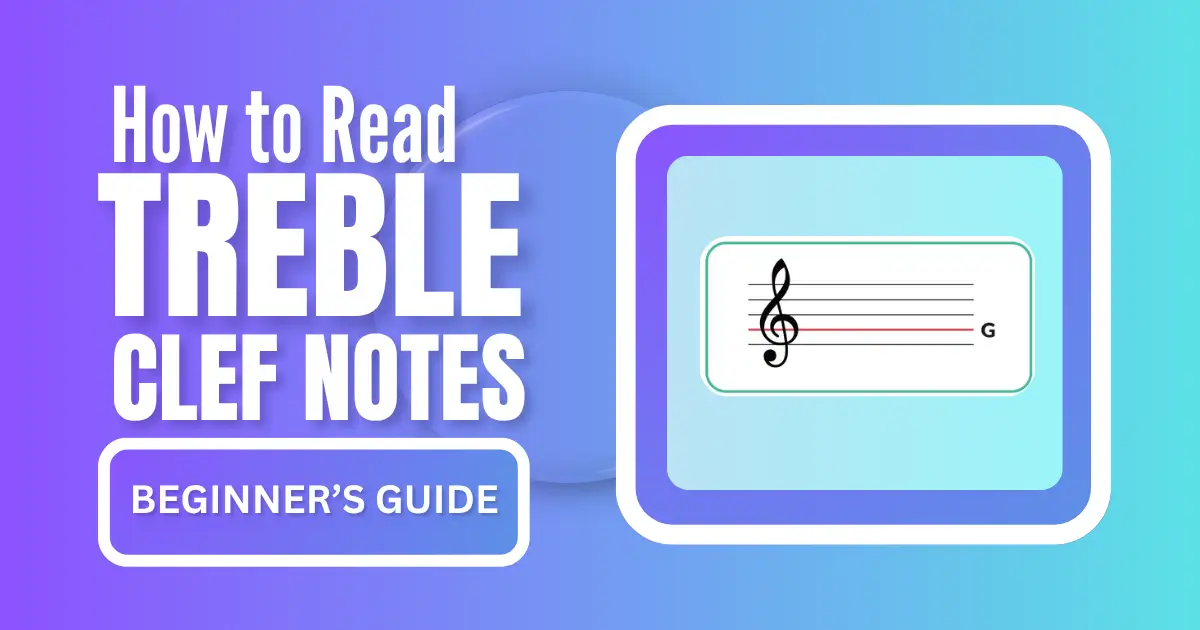
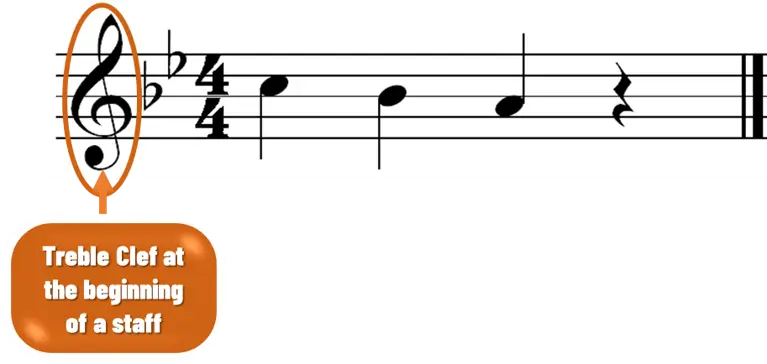
The treble clef—also called the G clef—is a symbol that tells you where the note G is on the music staff. It curls around the second line from the bottom, marking that line as G.
This clef is used for higher-pitched instruments and voices, including:
- 🎹 Piano (right hand)
- 🎻 Violin
- 🎤 Soprano & Alto vocals
- 🎼 Flute, Clarinet, Trumpet, and more
If you’re learning music, especially as a beginner, understanding treble clef notes on staff is one of the first skills you’ll need.
Common Instruments That Use the Treble Clef
The treble clef is one of the most widely used clefs in music. It’s perfect for instruments that play higher-pitched notes. If you’re learning to read treble clef notes, chances are you’re working with one of these instruments:
🎹 1. Piano (Right Hand)
The treble clef is used for the right hand in piano music, playing higher notes—like melodies and harmonies.
🎻 2. Violin
Violin players use the treble clef exclusively. It’s perfect for the instrument’s high pitch range.
🎷 3. Saxophone
Most saxophones—like alto and tenor sax—read music in the treble clef.
🎺 4. Trumpet
The trumpet is another brass instrument that reads treble clef notes. Its melodies often soar above the rest of the band.
🎶 5. Flute
Flutes play in a high register and read only in treble clef—making it a key clef for woodwind players.
🎸 6. Guitar
Surprisingly, even though it’s a relatively low instrument, guitar music is written in the treble clef (one octave higher than it sounds).
🎤 7. Soprano & Alto Voices
Singers in soprano, mezzo-soprano, and alto ranges use the treble clef for vocal sheet music.
Treble Clef Staff Notes: Lines & Spaces
The music staff consists of five horizontal lines and four spaces. Notes are placed either on a line or in a space, and each position corresponds to a specific pitch—depending on the clef.
In the treble clef, these pitches are higher, typically starting from E4 (first line) up to F5 (fifth line) and beyond.
To read treble clef notes on a staff, memorize the names of the lines and spaces.
The 5 Lines Notes (From Bottom to Top)
These are the treble clef staff notes that sit on the lines of the staff.
Think of the treble clef staff as a musical ladder. Each line and space represents a specific note, and with a few quirky tricks, you’ll memorize them in minutes.
The lines of the treble clef spell a secret word: E-G-B-D-F.
Here’s how to remember them forever:
- E – Every
- G – Good
- B – Boy
- D – Does
- F – Fine
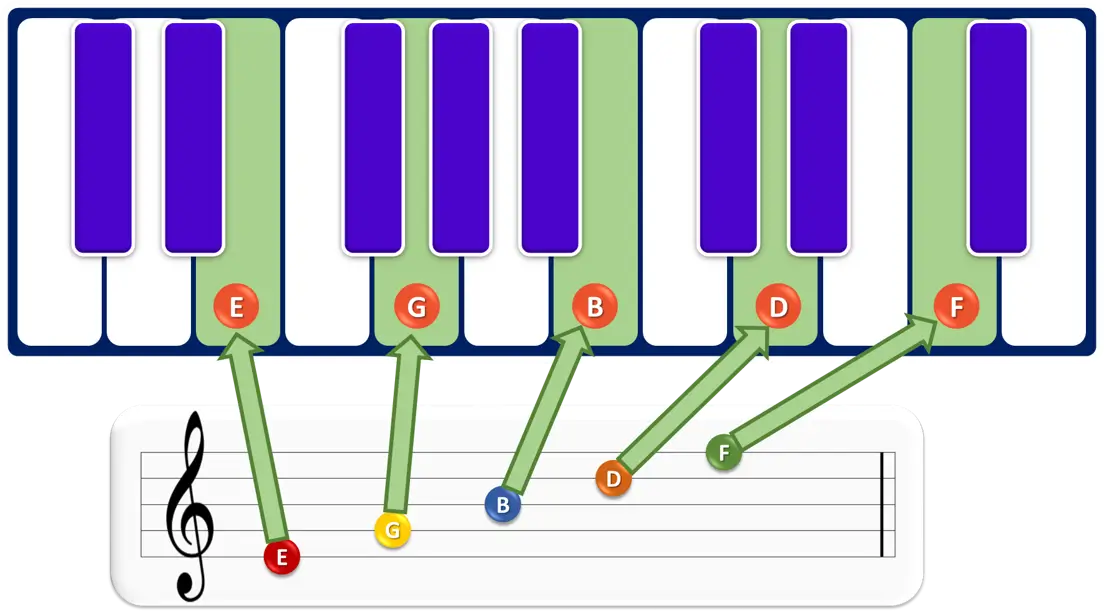
But wait! Let’s make it fun for modern learners:
- Alternative Mnemonics:
- “Elvis’s Guitar Broke During Festivals”
- “Eating Grapes Before Dinner Forever” (Great for kids!).
The 4 Spaces Notes (From Bottom to Top)
The spaces spell the word F-A-C-E (yes, literally “FACE”!). These are the treble clef notes found in the spaces between the lines.
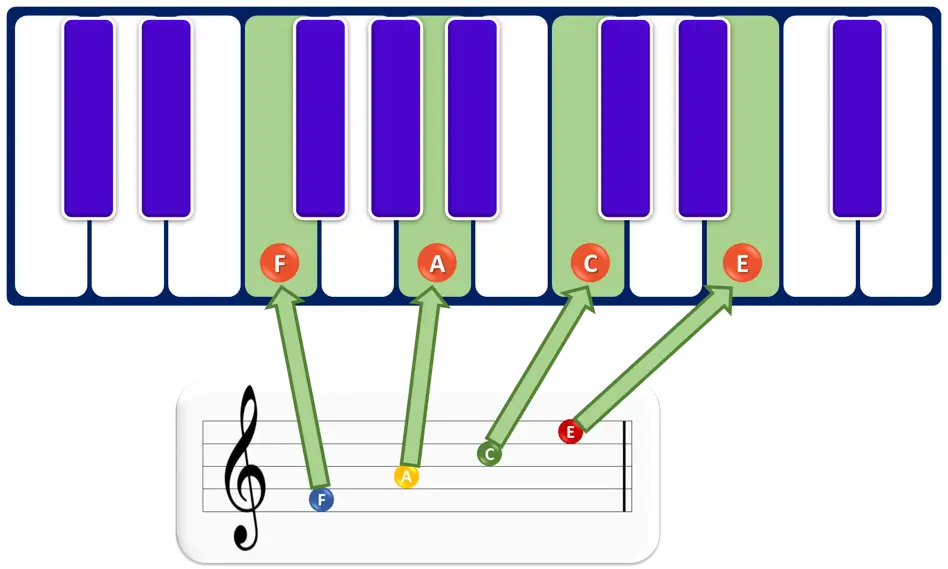
Memory Hack:
- “FACE in the space!” (Repeat this 3x—it’s unforgettable!).
- Alternative: “Frogs Always Cook Eggs” for humor.
Pro Tip: Test yourself by covering the mnemonics and reciting the notes!
Notes Above & Below the Staff (Ledger Lines Made Easy)
So you’ve mastered the 5 lines and 4 spaces—but what happens when notes go off the staff? Meet ledger lines: tiny lines that act like musical “extensions” for higher or lower notes. Let’s decode them without the stress!
What Are Ledger Lines?
Ledger lines are short, horizontal lines added above or below the regular 5-line music staff. They allow you to write notes that fall outside the range of the standard staff.
Learning these extra notes on the staff treble clef expands your reading range for melodies and solos.
Why Do We Need Ledger Lines?
The standard music staff has only five lines and four spaces, which limits how many pitches you can write. But music often goes beyond that range, especially in piano, flute, violin, and vocal music.
Instead of creating a whole new staff, we use ledger lines to:
- Write higher notes above the staff
- Write lower notes below the staff
Common Ledger Line Treble Clef Notes
Middle C (C4) → one ledger line below the treble clef staff
IMAGE
High G or A – one or more lines above the staff
A5 → one ledger line above the staff
G3 → two ledger lines below
How to Read Ledger Lines Without Panicking
- Start with Middle C:
- Find the treble clef staff.
- Draw one tiny line below it. That’s Middle C!
- Fun Fact: Middle C is the same note as the 4th string on a guitar (no fret) or the white key left of two black keys on a piano.
- Notes Above the Staff:
- Each ledger line above = move up the musical alphabet (A, B, C…).
- Example: The first ledger line above the staff is A, the next space is B, and so on.
- Notes Below the Staff:
- Each ledger line below = move down the alphabet (C, B, A…).
- Example: The first ledger line below is Middle C, the next space is B, etc.
Pro Tip: Count ledger lines slowly, like climbing stairs!
Common Mistakes to Avoid When Reading Ledger Lines
- Miscounting Lines: Accidentally skipping a ledger line (e.g., thinking the second ledger line above is B instead of C).
- Fix: Write the note letters lightly in pencil until you’re confident.
- Confusing Treble/Bass Clef Ledger Lines:
- Middle C is one ledger line below treble clef but one ledger line above bass clef.
Test Yourself With Real Music Examples
Theory is great, but real music is where the magic happens! Let’s decode simple melodies you know and love to cement your treble clef skills.
Why Practice with Real Songs?
- Builds Muscle Memory: Recognizing notes in context speeds up sight-reading.
- Boosts Motivation: Playing familiar tunes feels rewarding (no more boring scales!).
- Reveals Gaps: Spot which notes trip you up and focus on them.
Example 1: “Happy Birthday”
Let’s break down the first few notes of this classic melody.
- First Note: G (second line of the staff).
- Lyric Match: The “Hap-” in “Happy.”
- How to Find It: Use the mnemonic “Good” (lines = E-G-B-D-F).
- Second Note: A (second space).
- Lyric Match: The “*-py*” in “Happy.”
- How to Find It: Spaces spell F-A-C-E → second space = A.
- Third Note: G (second line again).
- Lyric Match: The “Birth-” in “Birthday.”
Example 2: “Mary Had a Little Lamb”
This nursery rhyme uses just 3 notes—perfect for beginners!
- First Note: E (bottom line).
- Lyric Match: “*Ma-*” in “Mary.”
- How to Find It: Lines = E-G-B-D-F → bottom line = E.
- Second Note: D (fourth line).
- Lyric Match: “*-ry*” in “Mary.”
- Mnemonic: “Does” (fourth line = D).
- Third Note: C (third space).
- Lyric Match: “Had.”
- How to Find It: Spaces = F-A–C-E → third space = C.
Pro Tip: Use a piano app like Virtual Piano to play these notes as you follow along.
Example 3: “Twinkle Twinkle Little Star”
Time to tackle ledger lines!
- First Note: Middle C (first ledger line below the staff).
- Lyric Match: “Twin-” in “Twinkle.”
- Reminder: Middle C connects treble and bass clef.
- Second Note: G (second line).
- Lyric Match: “-kle” in “Twinkle.”
- Third Note: A (second space).
- Lyric Match: “Twin-” (second “twinkle”).
Tools to Use:
- MusicTheory.net’s Note Trainer (free interactive quiz).
- Printable Worksheet (link to a free download with answer key).
Common Mistakes & Fixes
- Rushing: New readers often guess notes quickly and make errors.
- Fix: Say the note name aloud before playing/singing it.
- Ignoring Rhythms: Focus on note names first, then add clapping/tapping for rhythm.
- Forgetting Mnemonics: Keep your “Every Good Boy Does Fine” cheat sheet visible!
FAQs: Reading Treble Clef Notes
1. What is the easiest way to memorize treble clef notes?
Answer: Use mnemonics like “Every Good Boy Does Fine” for lines (E-G-B-D-F) and “FACE” for spaces. For a modern twist, try “Elephants Goofily Bake Delicious Fudge” or “FACE in the Space!”
2. Why is the treble clef called the G clef?
Answer: The treble clef’s curl wraps around the second line of the staff, which represents the note G. This “anchors” the clef, making it a visual reference for musicians.
3. How do you read notes above and below the treble clef staff?
Answer: Use ledger lines—small lines extending the staff. For example:
Middle C sits on the first ledger line below the staff.
High A is on the first ledger line above.
4. What’s the difference between treble clef and bass clef?
Answer:
Treble Clef: Higher-pitched notes (right-hand piano, vocals, violins).
Bass Clef: Lower-pitched notes (left-hand piano, cello, bass guitar).
*Learn both with our guide [“Treble vs. Bass Clef: A Beginner’s Guide”].
5. Can I use the treble clef for singing?
Answer: Yes! Most soprano and alto vocal music uses the treble clef. Start with simple melodies like “Happy Birthday” or “Amazing Grace”
6. What are the most common mistakes when reading treble clef?
Answer:
Mixing up lines and spaces (e.g., confusing B and A).
Forgetting Middle C’s ledger line.
Skipping the G anchor (second line).
Test yourself with our [Interactive Treble Clef Quiz]!
7. How long does it take to learn treble clef notes?
Answer: With daily practice, most beginners master the basics in 1-2 weeks. Use our free chart and focus on 10-minute daily drills for faster progress.
8. Which instruments primarily use the treble clef?
Answer: The treble clef is essential for:
High-pitched instruments: Flute, violin, trumpet, clarinet, and soprano saxophone.
Piano: Right-hand melodies.
Vocals: Soprano and alto singers.
Explore our [Beginner’s Guide to Reading Sheet Music] for instrument-specific tips!
9. How do treble clef notes translate to piano keys?
Answer:
Middle C (ledger line below the staff) = C4 (the 4th C on a standard piano).
Second line G = G4 (the white key just above the middle of the keyboard).
Pro Tip: Use our [Free Treble Clef Chart PDF] to label your piano keys as you learn!
10. What apps or tools can help me practice treble clef notes?
Answer: Top beginner-friendly tools:
Apps: Simply Piano (interactive lessons), Music Tutor (note quizzes).
Websites: MusicTheory.net (free exercises), ToneGym (gamified training).
Printable Worksheets: Download our [Treble Clef Practice Pack] (email opt-in).
Bonus: Many apps offer free trials—start there!
Final Thought: Your Journey to Treble Clef Mastery Starts Now!
Learning to read the treble clef isn’t just about decoding notes—it’s about unlocking a lifetime of musical joy. Whether you’re dreaming of playing piano solos, writing songs, or finally understanding the sheet music gathering dust in your drawer, you’ve taken the first critical step.
Remember:
- Progress > Perfection: Even Mozart started with “Twinkle Twinkle”!
- Tools Matter: Your free chart and quiz are cheat codes—use them shamelessly.
- Celebrate Wins: Nailed Middle C? Danced through ledger lines? That’s worth a mini dance break!
What’s Next?
- Print your PDF, stick it on your fridge, and quiz yourself daily.
- Challenge a friend to beat your quiz score (bragging rights encouraged!).
- Dive deeper: Bass clef, chords, or composing—your musical journey is just beginning.
You’ve got the map. Now go make some noise! 🎶
P.S. Tag us when you play your first melody—we’ll cheer you on!