The musical staff is the foundation of music notation, making it possible to write and read music. It consists of five lines and four spaces, where notes are placed to represent different pitches. Understanding the music staff is essential for musicians, whether you’re just starting to learn an instrument or looking to deepen your knowledge of music theory. In this guide, we’ll explore the structure of the music staff, how notes are positioned, and the key concepts you need to know to read sheet music confidently. Let’s get started and break down this fundamental element of music!
What is a Musical Staff?
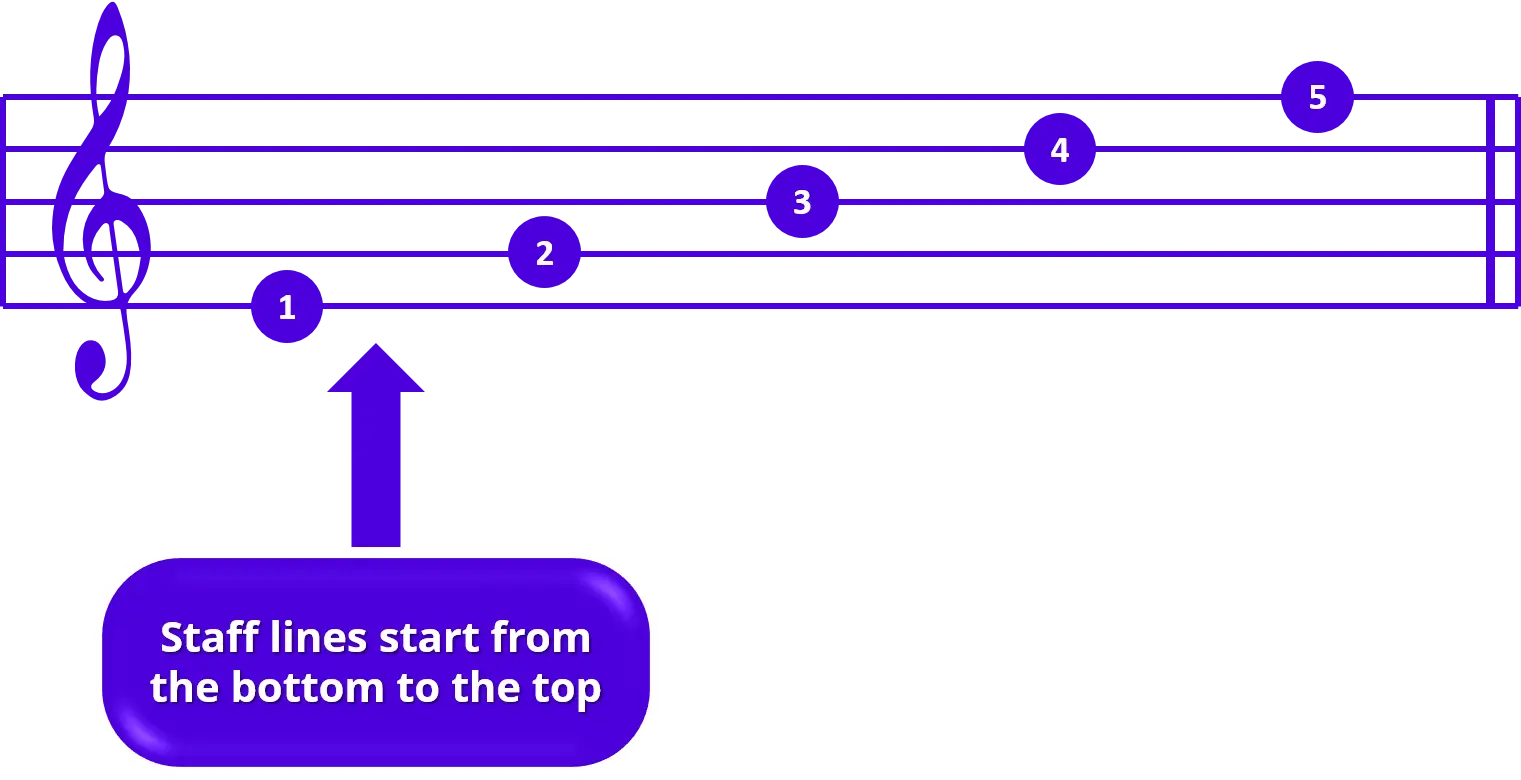
Think of the musical staff as the “canvas” for music. It’s where everything in music notation comes to life! The staff consists of five horizontal lines and four spaces. These lines and spaces are where notes are placed to tell musicians what pitch to play or sing.
The musical staff might look simple, but it’s an essential tool for organizing music and making it readable. It’s the framework that allows musicians to visually interpret and perform music. Whether you’re learning an instrument, singing, or composing, understanding the music staff is the first step to reading and playing music.
Musical Staff Symbols: What They Mean and Why They Matter
The musical staff is made up of several key components that work together to help musicians read and write music accurately. Let’s break them down:
Lines and Spaces
The lines and spaces of the musical staff are the foundation for placing notes. Every note written on the staff corresponds to a specific pitch, and the position of the note on the staff (whether it’s on a line or in a space) determines which pitch it represents. Let’s dive deeper into how lines and spaces work and how you can read them.
Treble & Bass Clef
Clefs
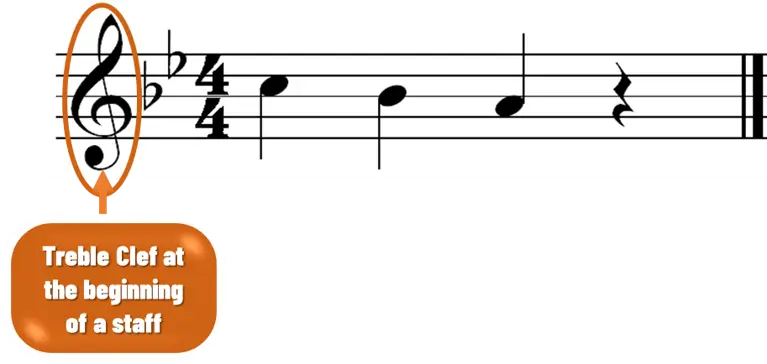
A clef is a symbol that appears at the beginning of a musical staff and tells you which notes correspond to which lines and spaces. The most common clefs are:
Treble Clef (G Clef): Used for higher-pitched instruments like the violin, flute, and piano’s right hand.
Bass Clef (F Clef): Used for lower-pitched instruments like the cello, bass guitar, and piano’s left hand.
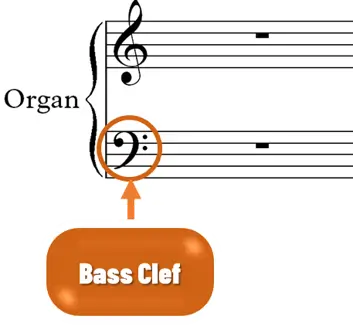
The clef essentially “sets” the staff, allowing musicians to know the pitch of each note written on it.
Note Placement on Musical Staff
The placement of a note on the lines or spaces of a musical staff directly determines its pitch. For example, in the treble clef, the note on the bottom line is E, and the note in the top space is F. In the bass clef, the positions change, but the principle is the same. Each note’s position on the staff corresponds to a particular sound.
Ledger Lines
When notes go beyond the normal range of the five lines and four spaces of the staff, ledger lines come into play. Ledger lines are short horizontal lines placed above or below the staff to extend the range and allow musicians to read higher or lower notes. Essentially, they are a way to “extend” the staff, giving us more room for extra notes without cluttering up the notation.
Time Signature
This tells you how many beats are in each measure and what kind of note gets one beat. For example, 4/4 means 4 beats per measure, and a quarter note equals one beat. It is normally found at the beginning of a musical staff.
Key Signature
A group of sharps (#) or flats (♭) that appears right after the clef. This sets the tonal center of the piece—like C major, G major, or A minor. It is placed after the key signature, the time signature indicates the meter of the music.
Notes and Rests
These are the most important music staff symbols. Notes tell you what to play; rests tell you when to be silent. Each note or rest symbol has a value (whole, half, quarter, etc.).
You’ll find music staff notes written either on a line or in a space—each one representing a different pitch.
Bar Lines
Vertical lines that divide the staff into measures or bars. This makes music easier to read and follow.
Dynamics Symbols (Volume)
Dynamics tell you how loud or soft to play.
- pp – Pianissimo (very soft)
- p – Piano (soft)
- mp – Mezzo piano (moderately soft)
- mf – Mezzo forte (moderately loud)
- f – Forte (loud)
- ff – Fortissimo (very loud)
- crescendo ( < ) – Gradually get louder
- decrescendo / diminuendo ( > ) – Gradually get softer
Articulation Marks
These show how a note should be played.
- Staccato (·) – Short and detached
- Legato (– or slur line) – Smooth and connected
- Accent ( > ) – Emphasize the note
- Tenuto ( _ ) – Hold the note for its full value
- Marcato ( ^ ) – Strong, marked accent
Repeat Signs
Tell you to go back and play a section again.
- 𝄆 𝄇 – Repeat the section between the signs
- D.C. al Fine – Go back to the beginning and end at “Fine”
- D.S. al Coda – Go back to the sign (𝄋) and jump to the coda (𝄌)
Ornaments and Expression Symbols
These add flair and decoration to the music.
- Trill (tr) – Rapid alternation between two notes
- Grace Note (𝅘𝅥) – A quick note played just before the main one
- Fermata (𝄐) – Hold the note longer than its usual duration
- Mordent – A quick single alternation with the next note up or down
Slurs and Ties
Curved lines that look similar but mean different things:
- Slur – Connects different pitches to be played smoothly
- Tie – Connects the same note across measures or beats to sustain it longer
Tempo Markings
Usually found at the top left of the music, these tell you the speed of the piece.
- Allegro – Fast and lively
- Andante – Walking pace
- Adagio – Slow and expressive
- Presto – Very fast
- Or you might see something like:
♩ = 120(which means 120 quarter notes per minute)