Ready to add depth and emotion to your music? Learning piano chord progressions and understanding chord progressions in general will transform your playing and songwriting. From soulful ballads on the keys to catchy guitar riffs, the magic lies in how chords move together.
What is a Chord Progression?
A chord progression is a sequence of chords played in a particular order. Each progression conveys a mood: happy, sad, hopeful, or tense. On piano, visual patterns emerge on the keyboard, making it easier to see relationships between chords. But these patterns apply across all instruments—from guitars to synths.
Example: C → F → G → C (I → IV → V → I in C Major).
Key Components:
- Tonic (I chord): The home base that feels resolved.
- Dominant (V chord): Creates tension needing resolution.
- Subdominant (IV chord): Bridges tonic and dominant.
Basics of Roman Numerals in Chord Analysis
Roman numeral analysis uses I through VII to show chords based on their position in a scale, with uppercase for major and lowercase for minor. This system helps you see chord roles (tonic, subdominant, dominant), makes transposing easy, and lets you compare songs without worrying about specific notes.
- Uppercase numerals = Major or augmented chords (e.g., I, IV, V⁺).
- Lowercase numerals = Minor or diminished chords (e.g., ii, iii, vii°).
- Symbols for inversions: Numbers like ⁶ (1st inversion) or ⁶₄ (2nd inversion).
Diatonic Chords in C Major
Example: C Major Scale
| Scale Degree | Chord | Roman Numeral | Function |
|---|---|---|---|
| 1 | C | I | Tonic (Home) |
| 2 | Dm | ii | Supertonic |
| 3 | Em | iii | Mediant |
| 4 | F | IV | Subdominant |
| 5 | G | V | Dominant |
| 6 | Am | vi | Submediant |
| 7 | Bdim | vii° | Leading Tone |
Functional Harmony:
- Tonic (I, iii, vi): Stable, “home” chords.
- Subdominant (IV, ii): Transitional, “away” chords.
- Dominant (V, vii°): Tense, demanding resolution to tonic.
Diatonic Chords in A Minor (Natural Minor)
Example: A Natural Minor Scale
| Scale Degree | Chord | Roman Numeral | Function |
|---|---|---|---|
| 1 | Am | i | Tonic |
| 2 | Bdim | ii° | Supertonic |
| 3 | C | III | Mediant |
| 4 | Dm | iv | Subdominant |
| 5 | Em | v | Dominant |
| 6 | F | VI | Submediant |
| 7 | G | VII | Subtonic |
Harmonic Minor Adjustment
- Raise the 7th scale degree (G → G♯ in A Minor) to create V (E Major) and vii° (G♯ Dim) for stronger resolution.
Common Chord Progressions
Major Key Examples (C Major)
| Chord Names | Roman Numerals | Genre/Example |
|---|---|---|
| C – G – Am – F | I – V – vi – IV | Pop (Let It Be, Someone Like You) |
| C – F – G – C | I – IV – V – I | Blues/Rock (Johnny B. Goode) |
| Dm – G – C | ii – V – I | Jazz (Autumn Leaves) |
| C – Am – F – G | I – vi – IV – V | 50s Progression (Stand By Me) |
Minor Key Examples (A Minor)
| Chord Names | Roman Numerals | Genre/Example |
|---|---|---|
| Am – F – C – G | i – VI – III – VII | Pop/Rock (Zombie by The Cranberries) |
| Am – Dm – E – Am | i – iv – V – i | Harmonic Minor (Classical/Flamenco) |
| Am – G – F – E | i – VII – VI – V | Andalusian Cadence (Hit the Road Jack) |
| Am – C – Dm – F | i – III – iv – VI | Modern Ballads |
Inversions in Progressions
Example in C Major:
- Chord Names: C (C-E-G) → F/A (A-C-F) → G/B (B-D-G) → C
- Roman Numerals: I → IV⁶ (1st inversion) → V⁶ (1st inversion) → I
Example in A Minor:
Roman Numerals: i → III⁶₄ (2nd inversion) → VI → V (harmonic minor)
Chord Names: Am (A-C-E) → C/G (G-C-E) → F (F-A-C) → E (E-G♯-B)
Advanced Progressions
Borrowed Chords (Modal Mixture)
- Chord Names: C – A♭ – F – G
- Roman Numerals: I – ♭VI – IV – V (Borrowed ♭VI from C Minor)
Secondary Dominants
- Chord Names: C – E7 – Am – D7 – G
- Roman Numerals: I – V⁷/vi – vi – V⁷/V – V
Chord Progression Examples
1. I-IV-V Progression (The Most Common)
This is the most widely used chord progression across many genres of music, from pop and rock to blues and country. It creates a simple, satisfying tension and release.
- Key of C Major: C (I) – F (IV) – G (V)
- Example: “Twinkle, Twinkle, Little Star” (C – F – G – C)
- Try building your own using AutoChord
2. I-V-vi-IV (The Pop Progression)
This progression is often called the pop progression because it’s used in so many hit songs, especially in pop and rock music.
- Key of C Major: C (I) – G (V) – Am (vi) – F (IV)
- Example: “Let It Be” by The Beatles (C – G – Am – F)
- Try it here: ChordChord Generator
3. ii-V-I Progression (Jazz Favorite)
This is a favorite progression in jazz music, providing smooth and sophisticated transitions.
- Key of C Major: Dm (ii) – G (V) – C (I)
- Example: Common in jazz standards like “Autumn Leaves” (Dm – G – C)
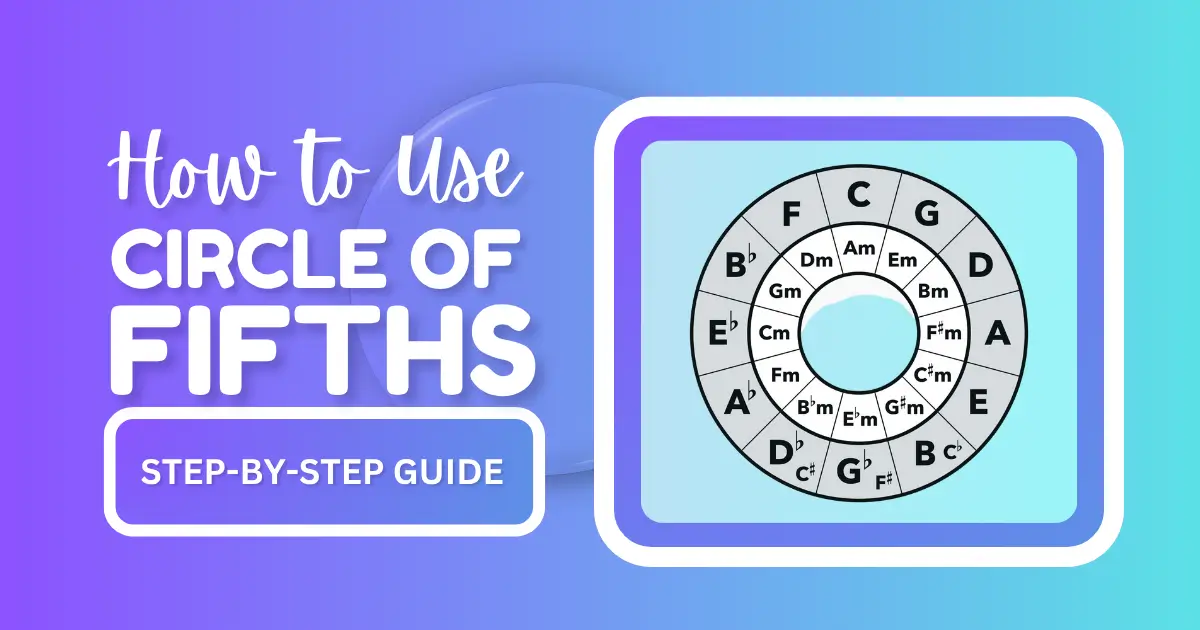
- Visualize this on a Circle of Fifths Tool
4. I-vi-IV-V (Classic 50s Progression)
This progression was the backbone of many songs from the 1950s, particularly in doo-wop and early rock music.
- Key of C Major: C (I) – Am (vi) – F (IV) – G (V)
- Example: “Stand By Me” by Ben E. King (C – Am – F – G)
5. vi-IV-I-V (Another Pop Hit Progression)
This is another very popular progression used in modern pop music. It’s a variation of the I-V-vi-IV progression.
- Key of C Major: Am (vi) – F (IV) – C (I) – G (V)
- Example: “With or Without You” by U2 (Am – F – C – G)
6. vi–IV–I–V (The Epic Ballad)
- Example: Am–F–C–G
- Emotional, cinematic feel.
Chord Progression Chart (Major & Minor Keys)
In a Major Key (Example: C Major)
| Roman Numeral | Chord Name | C Major Example |
|---|---|---|
| I | Tonic | C |
| ii | Supertonic | Dm |
| iii | Mediant | Em |
| IV | Subdominant | F |
| V | Dominant | G |
| vi | Submediant | Am |
| vii° | Leading Tone | Bdim |
Popular Major Key Progressions
| Name | Roman Numerals | Example in C Major |
|---|---|---|
| Pop Progression | I–V–vi–IV | C–G–Am–F |
| Doo-Wop | I–vi–IV–V | C–Am–F–G |
| Jazz Turnaround | ii–V–I | Dm–G–C |
| Ballad Loop | vi–IV–I–V | Am–F–C–G |
| Sad Pop | I–vi–iii–IV | C–Am–Em–F |
In a Minor Key (Example: A Minor)
| Roman Numeral | Chord Name | A Minor Example |
|---|---|---|
| i | Tonic | Am |
| ii° | Supertonic | Bdim |
| III | Mediant | C |
| iv | Subdominant | Dm |
| v | Dominant | Em (or E in harmonic minor) |
| VI | Submediant | F |
| VII | Subtonic | G |
Popular Minor Key Progressions
| Name | Roman Numerals | Example in A Minor |
|---|---|---|
| Sad Ballad | i–VI–III–VII | Am–F–C–G |
| Minor Jazz | ii°–V–i | Bdim–E–Am |
| Dark Trap | i–iv–i–VII | Am–Dm–Am–G |
| Melancholy Loop | i–VII–VI–VII | Am–G–F–G |
| Cinematic Tension | i–iv–v–i | Am–Dm–Em–Am |