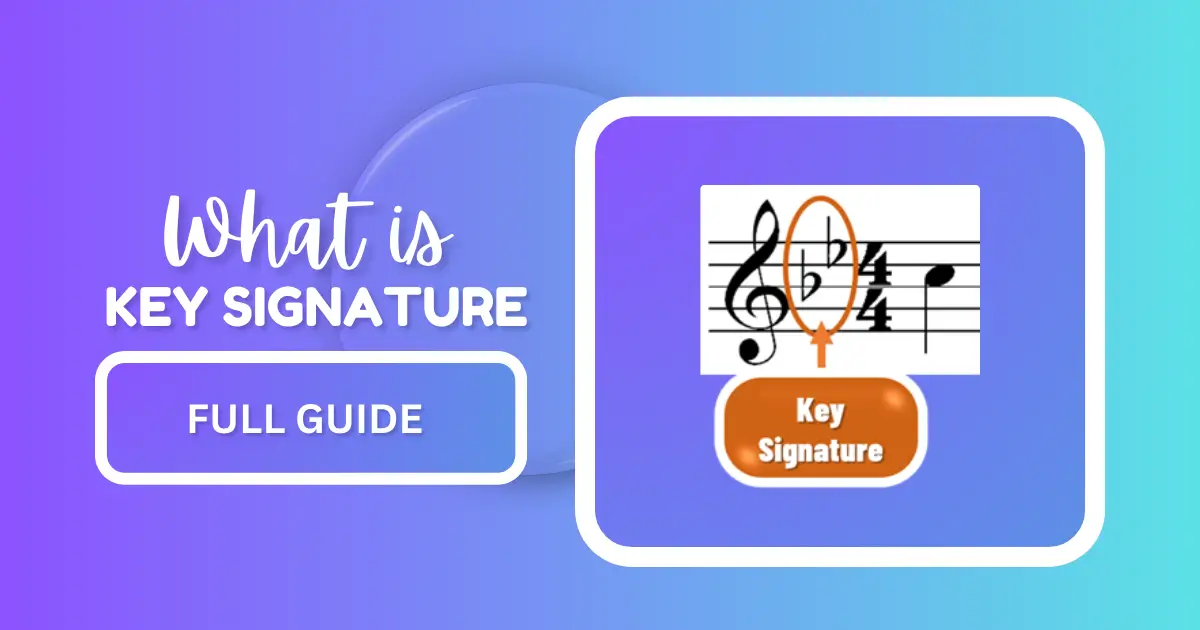
Ever seen a bunch of sharps (♯) or flats (♭) right after the clef on sheet music? That’s the key signature, and it tells you a lot about the music before you even play a single note.
In this guide, we’ll break down:
What a key signature actually means
How to read it (even as a beginner)
Easy tricks to remember sharps and flats
How key signatures affect the sound and feel of your music
Let’s make this easy.
What Is a Key Signature?
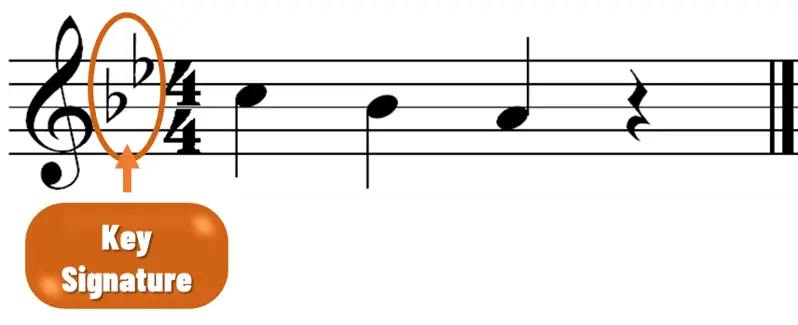
A key signature is a group of sharps or flats placed right after the clef. It tells you two things:
- Which notes are automatically sharped or flatted throughout the piece
- What key the music is in (like C major, A minor, etc.)
It’s basically a set of instructions for the rest of the song. Instead of writing a sharp or flat every time, the composer sets the rule at the start.
What is the use of key signature?
Key signatures help you:
- Understand the scale or tonal center of a piece
- Avoid reading mistakes—no more guessing which notes are altered
- Transpose and arrange music with ease
- Choose the right chords when playing by ear or improvising
Knowing the key signature saves time and helps you sound cleaner and more in control.
How to Read a Key Signature
Look at the beginning of any music staff. After the clef, you’ll see either:
- No sharps or flats (C major or A minor)
- One or more sharps (♯)
- One or more flats (♭)
If there’s one sharp and it’s F♯, the key is G major (or E minor). Two sharps? It’s D major. Each combination of sharps or flats points to a specific key.
Major Keys with Flats
What is a Flat (♭)?
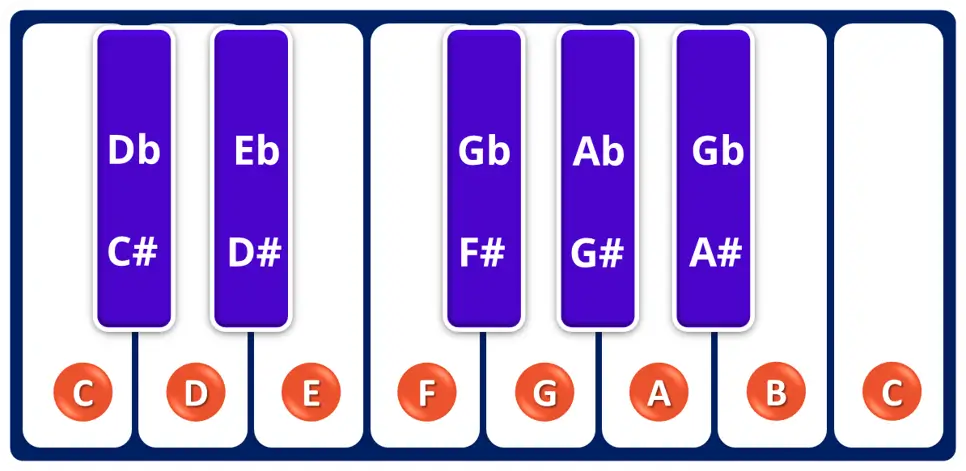
A flat lowers the pitch of a note by one semitone (half step).
Example:
- The note B♭ is one semitone lower than B.
- On a piano, it’s the black key to the left of B.
1. C Major Key
C Major has no sharps or flats.
The scale of C Major can be played in the pattern:
C D E F G A B C
2. F Major Key
F Major has one (1) flat.
The flat in F Major is B♭.
The scale of F Major can be played in the pattern:
F G A B♭ C D E F
3. Bb Major Key
B♭ Major has two (2) flats.
The flats in B♭ Major are B♭ and E♭.
The scale of B♭ Major can be played in the pattern:
B♭ C D E♭ F G A B♭
4. Eb Major Key
E♭ Major has three (3) flats.
The flats in E♭ Major are B♭, E♭, and A♭.
The scale of E♭ Major can be played in the pattern:
E♭ F G A♭ B♭ C D E♭
5. Ab Major Key
A♭ Major has four (4) flats.
The flats in A♭ Major are B♭, E♭, A♭, and D♭.
The scale of A♭ Major can be played in the pattern:
A♭ B♭ C D♭ E♭ F G A♭
6. Db Major Key
D♭ Major has five (5) flats.
The flats in D♭ Major are B♭, E♭, A♭, D♭, and G♭.
The scale of D♭ Major can be played in the pattern:
D♭ E♭ F G♭ A♭ B♭ C D♭
7. Gb Major Key
G♭ Major has six (6) flats.
The flats in G♭ Major are B♭, E♭, A♭, D♭, G♭, and C♭.
The scale of G♭ Major can be played in the pattern:
G♭ A♭ B♭ C♭ D♭ E♭ F G♭
8. Cb Major Key
C♭ Major has seven (7) flats.
The flats in C♭ Major are B♭, E♭, A♭, D♭, G♭, C♭, and F♭.
The scale of C♭ Major can be played in the pattern:
C♭ D♭ E♭ F♭ G♭ A♭ B♭ C♭
Use this order: B♭, E♭, A♭, D♭, G♭, C♭, F♭
Mnemonic: Battle Ends And Down Goes Charles’ Father
Key Signature Table for Major Keys With Flats
| Number of Flats | Key |
|---|---|
| 0 | C major |
| 1 | F major |
| 2 | B♭ major |
| 3 | E♭ major |
| 4 | A♭ major |
| 5 | D♭ major |
| 6 | G♭ major |
| 7 | C♭ major |
Major Keys with Sharps
What is a Sharp (♯)?
A sharp raises the pitch of a note by one semitone (half step).
Example:
- The note C♯ is one semitone higher than C.
- On a piano, it’s the black key to the right of C.
1. G Major Key
G Major has one (1) sharp.
The sharp in G Major is F♯.
The scale of G Major can be played in the pattern:
G A B C D E F♯ G
2. D Major Key
D Major has two (2) sharps.
The sharps in D Major are F♯ and C♯.
The scale of D Major can be played in the pattern:
D E F♯ G A B C♯ D
3. A Major Key
A Major has three (3) sharps.
The sharps in A Major are F♯, C♯, and G♯.
The scale of A Major can be played in the pattern:
A B C♯ D E F♯ G♯ A
4. A Major Key
E Major has four (4) sharps.
The sharps in E Major are F♯, C♯, G♯, and D♯.
The scale of E Major can be played in the pattern:
E F♯ G♯ A B C♯ D♯ E
5. B Major Key
B Major has five (5) sharps.
The sharps in B Major are F♯, C♯, G♯, D♯, and A♯.
The scale of B Major can be played in the pattern:
B C♯ D♯ E F♯ G♯ A♯ B
6. F# Major Key
F♯ Major has six (6) sharps.
The sharps in F♯ Major are F♯, C♯, G♯, D♯, A♯, and E♯.
The scale of F♯ Major can be played in the pattern:
F♯ G♯ A♯ B C♯ D♯ E♯ F♯
7. C# Major Key
C♯ Major has seven (7) sharps.
The sharps in C♯ Major are F♯, C♯, G♯, D♯, A♯, E♯, and B♯.
The scale of C♯ Major can be played in the pattern:
C♯ D♯ E♯ F♯ G♯ A♯ B♯ C♯
Use this order: F♯, C♯, G♯, D♯, A♯, E♯, B♯
Mnemonic: Father Charles Goes Down And Ends Battle
Key Signature Table for Major Keys With Flats
| Number of Sharps | Key |
|---|---|
| 0 | C major |
| 1 | G major |
| 2 | D major |
| 3 | A major |
| 4 | E major |
| 5 | B major |
| 6 | F♯ major |
| 7 | C♯ major |
What Are Enharmonic Keys?
Enharmonic keys are keys that sound the same but are written differently on sheet music. They use different note names (and accidentals), but on an instrument like the piano, they produce the exact same pitches.
For example:
- C♯ Major and D♭ Major sound identical when played but are written differently.
- F♯ Major and G♭ Major are another common pair.
Real-World Example (Piano)
Play these scales and you’ll hear no difference:
- C♯ Major: C♯ D♯ E♯ F♯ G♯ A♯ B♯ C♯
- D♭ Major: D♭ E♭ F G♭ A♭ B♭ C D♭
Common Enharmonic Key Pairs
| Sharp Key | Enharmonic Flat Key |
|---|---|
| C♯ Major (7 sharps) | D♭ Major (5 flats) |
| F♯ Major (6 sharps) | G♭ Major (6 flats) |
| B Major (5 sharps) | C♭ Major (7 flats) |
| G♯ Major (theoretical) | A♭ Major (4 flats) |
| D♯ Major (theoretical) | E♭ Major (3 flats) |
| A♯ Major (theoretical) | B♭ Major (2 flats) |
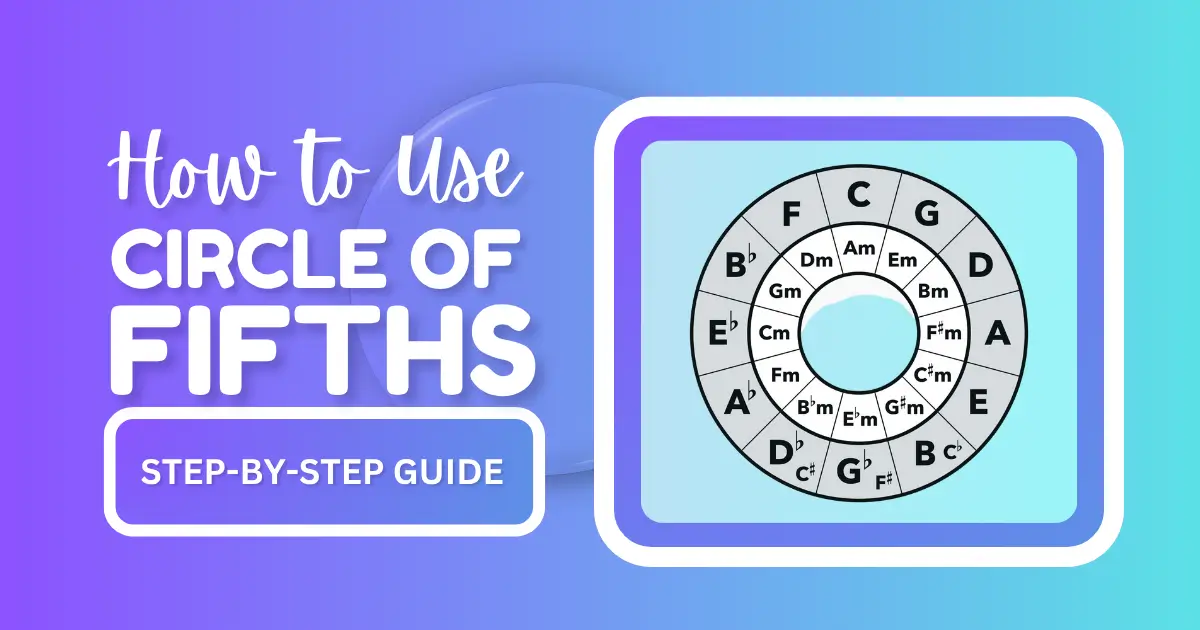
What is a Circle of Fifths?
The Circle of Fifths is a visual tool that shows how all the 12 major and 12 minor keys in music are related to each other. It’s called a “circle” because the keys are arranged in a circular pattern, and it’s called “fifths” because each step around the circle moves up (or down) by a musical interval called a perfect fifth.
How to Identify the Key Quickly
If the key signature has sharps, look at the last sharp and go up one half step to find the key.
Example: Last sharp is C♯ → One semitone up is D → You’re in D major.
If it has flats, the second-to-last flat gives you the key.
Example: If you see B♭ and E♭, the second-to-last is B♭ → That’s your key.
What About Minor Keys?
Every major key has a relative minor. They share the same key signature but start on different notes.
To find the relative minor, go down three half steps from the major key.
C major → A minor
G major → E minor
D major → B minor
Minor keys sound darker, moodier, and more introspective compared to their major counterparts.
Relative Minor Keys (Same Key Signature)
Each major key has a relative minor 3 semitones (a minor third) below it.
Relative Minor Keys With Sharps
| Major Key | Relative Minor | Sharps/Flats |
|---|---|---|
| C Major | A Minor | None |
| G Major | E Minor | 1 sharp (F♯) |
| D Major | B Minor | 2 sharps |
| A Major | F♯ Minor | 3 sharps |
| E Major | C♯ Minor | 4 sharps |
| B Major | G♯ Minor | 5 sharps |
| F♯ Major | D♯ Minor | 6 sharps |
| C♯ Major | A♯ Minor | 7 sharps |
Relative Minor Keys With Flats
| Major Key | Relative Minor | Flats |
|---|---|---|
| F Major | D Minor | 1 flat (B♭) |
| B♭ Major | G Minor | 2 flats |
| E♭ Major | C Minor | 3 flats |
| A♭ Major | F Minor | 4 flats |
| D♭ Major | B♭ Minor | 5 flats |
| G♭ Major | E♭ Minor | 6 flats |
| C♭ Major | A♭ Minor | 7 flats |
How Key Signatures Affect the Sound
Key signatures help create a consistent sound and emotional tone. A song in A♭ major might feel lush and smooth. One in B minor might feel tense and dramatic.
Genres often favor certain keys:
- Pop: C major, G major, A minor
- Jazz: B♭, E♭, F
- Classical: Wide range depending on the composer
- Electronic: C major or A minor (easy for MIDI input)
How to Practice Key Signatures
Here are simple ways to lock them into your brain and fingers:
- Play major and minor scales every day
- Use flashcards or mobile apps
- Practice sight-reading in different keys
- Write out the Circle of Fifths
- Transpose simple melodies between keys
Final Tip: Start with C Major
C major and A minor have no sharps or flats. Start there. Then move to G major, F major, and build up. One key at a time.
FAQs About Key Signatures
What’s the fastest way to memorize key signatures?
Use mnemonics and the Circle of Fifths. Practice one new key each day with its scale.
Can songs change key signatures mid-song?
Yes! That’s called modulation. It’s common in pop bridges and classical transitions.
Do digital audio workstations (DAWs) use key signatures?
Absolutely. Most DAWs let you set the key signature for MIDI editing, scale snapping, and even auto-harmony.
Is the key signature the same as the key?
Almost. The key signature tells you the notes used, but the key is also about the starting point and harmonic feel.
Do I need to know all 15 key signatures?
Eventually, yes—but start with the most common ones (C, G, F, D, A, B♭, E♭).